
A DOT inspector came by your building and saw a cracked flag or a raised edge, and now you have an official notice with your address on it. Before you freak out: a pavement violation notice is not a fine. There is no cost associated with getting one. It’s a legal filing with the county clerk that lets you know that the repairs are your responsibility and gives you a time frame to do the repairs. It’s not what you do today; it’s what you do in the next few weeks that determines what happens next.
What The Notice Really Says
Property owners are responsible for maintaining, repairing and installing the pavement next to their property, and violations are common for gaps under the flags, loose or cracked sections, improper slopes that cause drainage problems or hardware sticking up out of the concrete. The notice will include a Preliminary Inspection Report (PIR) and a sketch showing exactly where the inspector found the defects.
What to Do When You Get a Sidewalk Notice in NYC
If you get a NYC sidewalk violation notice, make sure the address and ownership is correct. If it is a valid issue, fix it within 75 days with a DCWP-licensed contractor and permit. If it is not a valid issue, appeal within 75 days. After correction, request a dismissal inspection. Repairs alone do not close the violation.
Step 1: Make Sure It’s Your Problem to Solve
First, check two things: that the address is your property and that you are the current owner of the record. If you’ve received one of these notices, don’t ignore it. Instead, mail a letter to the Department of Finance’s Correspondence Unit. DOT sometimes issues violations to the wrong owner because it’s relying on outdated ownership records.
Step 2: Decide: Appeal or repair
If you agree with the infringement
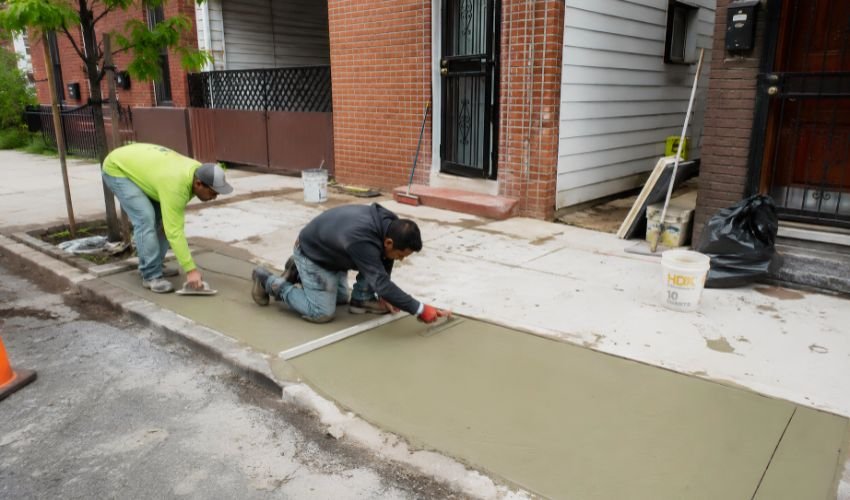
Hire a contractor that is licensed by the Department of Consumer and Worker Protection (DCWP). The contractor obtains a sidewalk construction permit and performs the work. You have 75 days from delivery to complete the repairs.
If you don’t agree
Suppose the PIR reports damages that are not present. You can appeal, but you have to file the appeal within 75 days of receiving the notice. DOT then schedules a reinspection to take place within 180 days, by a different inspector who never sees the original PIR. The second inspection result is final.
Step 3: Close the Violation for Good
Repairs don’t close your record by themselves; you have to request a sidewalk violation dismissal inspection once a licensed contractor completes the work under a valid permit; the violation is cleared when a DOT inspector verifies it was done correctly.
What if You do Nothing?
If you don’t repair defects within 75 days, DOT can do the work itself and bill you for it. The city won’t accept requests to do this on your behalf; it only happens after the deadline passes. A Department of Finance bill can also include an administrative charge on top of the cost of the repair, and if it’s not paid, it can include interest and a lien on your property. You should check with the DOF directly on your particular bill to verify the amounts, since surcharge amounts can vary.
Take the Next Right Step
The notice itself is free, and it is not a legal charge, but it is a deadline. Be certain the notice is accurate and addressed to you. Within the first couple of weeks, decide whether to repair or appeal. Don’t let the 75-day window pass without doing one or the other. All that expensive process city did repairs and administrative charges; fines only happen after that window closes with nothing done.
